La soif d’amour, de passion, ou encore de connexion intime, est un sentiment universel et intemporel. Elle transcende les époques, les cultures et les contextes. L’expression “soif de toi“ incarne cette quête brûlante d’une présence, d’un être cher, ou d’une intensité qui comble les désirs de l’âme et du cœur. Mais que signifie réellement cette “soif“, et pourquoi est-elle si puissante?
Savoir apaiser cette soif
Si la “soif de toi” est parfois romantique, elle peut aussi devenir accablante si elle n’est pas équilibrée.
Trouver des moyens de s’apaiser seul, de cultiver un amour-propre fort, et de valoriser les connexions existantes est essentiel pour éviter qu’elle ne devienne destructrice.
En fin de compte, cette soif est ce qui nous pousse à chercher, à aimer, et à nous dépasser. Elle nous rappelle que nous sommes des êtres relationnels, faits pour partager, ressentir et vibrer. “Soif de toi“ est bien plus qu’un simple désir : c’est un élan vital, une ode à ce qui fait battre le cœur et l’âme humaine.
Codashop is a popular online platform that specializes in providing users with a convenient way to purchase digital content, such as in-game items, game credits, and other virtual goods. With a simple and user-friendly interface, Codashop enables users to buy gaming credits, mobile top-ups, and subscriptions for a wide range of games and services from around the world.
Codashop’s Popularity in the Gaming World
The gaming industry is one of the primary sectors driving Codashop’s success. Gamers often spend a significant portion of their time and money on in-game items such as skins, currency, and special abilities. Codashop makes it easy to purchase these items without the hassle of complicated payment procedures. As a result, it has become an essential tool for gamers looking to enhance their experiences in titles like Free Fire, Call of Duty Mobile, and Clash of Clans.
Moreover, Codashop’s reliable and secure payment system makes it a trusted choice among gamers who wish to avoid potential fraud or delays often associated with other methods of payment.
Conclusion
In an increasingly digital world, Codashop serves as a valuable resource for gamers and digital content consumers. By offering an easy-to-use platform with a wide range of supported games and flexible payment methods, it ensures that users can enjoy their favorite digital experiences without the hassle of complicated transactions. Whether you’re a casual player or a dedicated gamer, Codashop provides a fast, secure, and convenient way to top up your gaming account and stay immersed in your favorite digital worlds.
On January 11th, the International Court of Justice (ICJ) began the public-hearing of South Africa’s genocide case against Israel. While there is little chance that the court’s ruling will force Israel to stop the war in Gaza, the United Nations system is equally on trial and the whole world is watching.
Historically, the International Judicial system has mostly been about the International Criminal Court (ICC) indicting current and former African leaders on charges of crimes against humanity and abuse of power. This led many African countries to withdraw from such a system and accuse it of bias and selective targeting of Africans. Now, let it be known that some of those indicted people had committed awful crimes and had to face justice. However, one could not ignore that the Court had a particular agenda for Africa. This itself is rooted in the idea of displaying the Collective West as morally superior to the Global South.
Now, ICC’s sister court, the ICJ, is experiencing an unprecedented phenomenon. South Africa is accusing Israel of committing genocide against Palestinians in Gaza. This is based on Israel’s collective punishment strategies of indiscriminate bombing that targets civilians, children, and health centers, expulsion and displacement of Palestinians from their homes, and the rhetoric from some of the government members that is symbolic of the intent to erase Palestinians from Gaza. Of course, Israel defended its campaign as a self-defense effort against Hamas.
This is a case that has brought so much scrutiny on the Court. Everyone is waiting to see how it will handle the overwhelming accusations and evidence against Israel and its biggest ally, the United States. Given the support Israel has received from the West and that South Africa has received from the rest of the world, it also feels like a trial of whether the court, and the United Nations system by extension, can truly flex its international law tenets and principles on a country backed and allied deeply to the West.
South Africa presents a strong case. It does not need to prove right away that Israel is committing a genocide. It simply needs to convince the panel of judges that there is a plausibility of genocide being committed and that the court needs to take provisional measures in line with the Genocide Convention.
The plight of Palestinians has been ongoing for decades, but it seems that the majority of the world is finally waking up to their call. The support for Palestine has reached the walls of power and it is shaking the current “human rights-based” order led by the Western World. That means something. The formal calls by other countries for an independent, sovereign state of Palestine are increasing day by day. The struggle for Palestine’s self-determination will be long and complex, but it is gaining momentum.
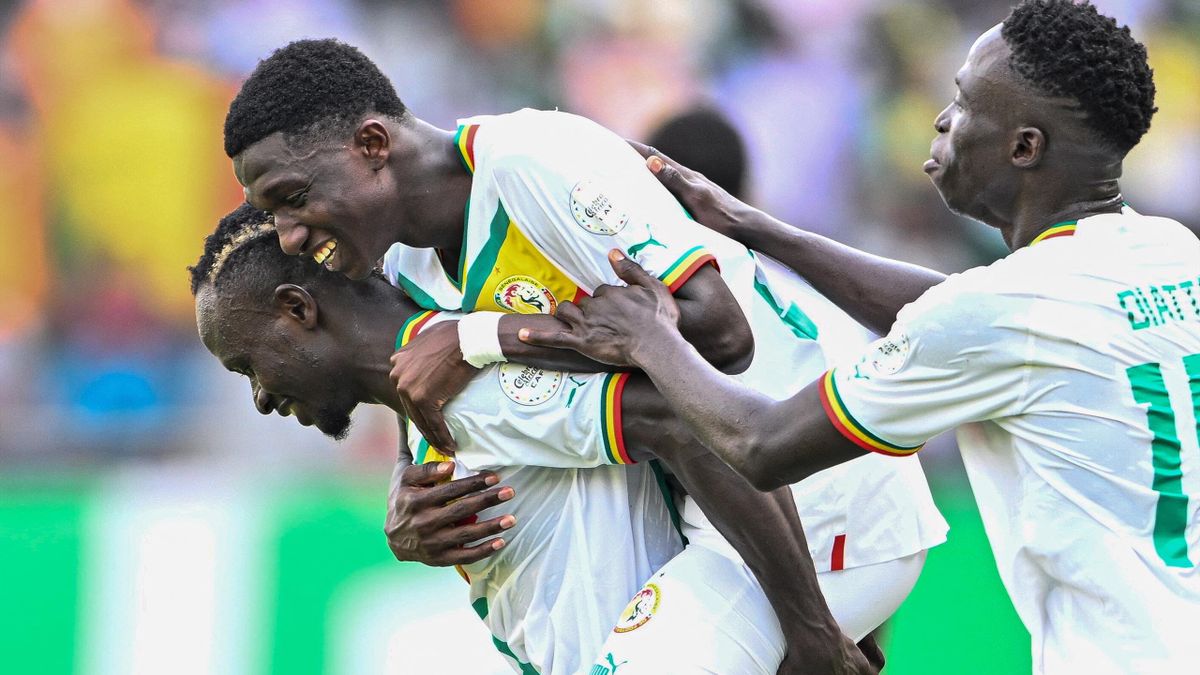
The defending champions opened their 2024 AFCON campaign with a cruising 3-0 victory against Gambia, thus cementing that they won’t be easily dethroned.
Despite boasting the experience and talents of the members of the 2021 AFCON winning squad, this is a Senegal team with an undeniable freshness. Young players like Pape Gueye, Pape Sarr, Nicolas Jackson, and co will look to play a more vital role and mark this as their tournament. In fact, that is the major requisite for the Teranga Lions to reclaim glory.
The members of the old guard, such as Idrissa Gana Gueye and Cheikhou Kouyaté will undoubtedly be content with a place on the bench and playing more of mentoring role to their teammates. On the other hand, the starting core of Sadio Mane, Edouard Mendy, and Kalidou Koulibaly have all grown older and moved to a less competitive league. This is a massive opportunity for the young core and it seems like they are going to seize it.
Senegal has been the most impressive team in a tournament characterized by major upsets so far. Nigeria, Ghana, Cameroon, Egypt, and Algeria have all failed to win their opening matches. It’s too early to count everyone else out, but Senegal is definitely justifying its label of defending champions and one of the tournament favorites.
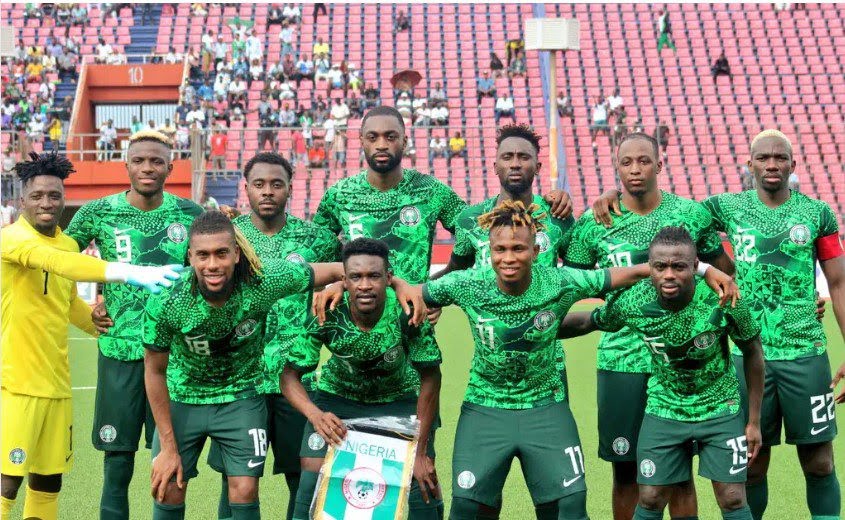
The 34th edition of the Africa Cup of Nations kicks off on Saturday, January 13th, 2024, in Ivory Coast and the stage is set for the Super Eagles to finally fly again.
No doubt; this competition boasts massive talents from all the 24 participating national teams. The defending Champions, Senegal, with their prolific captain, Sadio Mané, will be ready to mount a serious title defense. Morocco will be ready to prove themselves again as arguably the best team on the continent after their heroic run at the 2022 World Cup in Qatar. Meanwhile, the old powerhouses of Ghana, Cameroon, Egypt, Algeria, and the hosts, Côte d’Ivoire, will be represented by top talents from the best leagues in the world and ready to stake their claim for continental glory.
However, no team seems to be better well-positioned to take home the winner’s medal than Nigeria. They will be led by the reigning African Player of the Year and Serie A topscorer, Victor Osimhen. The goal-machine will be supported in attack with a solid cast from the same league, including AC Milan and Atalanta sensations, Samuel Chukwueze and Ademola Lookman. Regardless of the surprises of the tournament, we should at least expect Nigeria to entertain and score tons of goals.
A decade ago when Nigeria won the AFCON, they boasted talents like Vincent Enyeama, Ahmed Musa, John Obi Mikel, Victor Moses, and others. There is no doubt that the current version of the Super Eagles have enough talent and hunger to fly the green and white colors up high again.
There have been major surprises in this tournament in the past. There will be this time around as well. Despite a few significant absences, I’m still riding with Osimhen and the Super Eagles.
No doubt, the African continent is still grappling with the colonial legacies of European rule. However, none has proven to be as influential in the political and security life on the continent as the artificial nation-state.
When European leaders gathered in the 1884 Berlin Conference to partition the land, they drew the map of Africa from their desks in Germany with no knowledge of the continent and its people. This created artificial states that divided families, cultures, and civilizations across the new borders. With the focus on avoiding resource competition among European countries, the colonial projects further exacerbated the splits of African communities.
For instance, in the horn of Africa, they divided the Somali people across territories under the French, British, and Italian. In light of the independence movements in the second half of the 20th century, most countries inherited the colonial borders, and thus their resulting ethnic and cultural fragmentations. This has created economic and political systems built on ethnic differences, where those in power tend to marginalize and even repress minority ethnic groups.
Such is the story of Sudan and South Sudan, Somalia and Somaliland, English and French-speaking parts in Cameroon, and so forth. In these cases where populations are divided across ethnic lines, the nation-states have failed to cater to the needs of all their people. Instead, they have adopted the political systems that have triggered persistent insurgencies, political conflicts, and human rights violations.
Robert Jackson and Carl Rosberg explain state weakness in Africa from the origin of the state formation on the continent. Unlike most of the nation-states across the world, African states derive their legitimacy, not from their people, but from international institutions like the United Nations. The latter is set on maintaining the current geopolitical composition of the continent regardless of the apparent shortcomings of the current system, in several countries, to fulfill the foundational role of the state: security for its people.
That is why in the above mentioned countries, the nation-state is the most influential tool in neocolonialism. It excludes significant portions of the population from the political life of the country and sharing in its economic resources. Political elites know that they can get away with only catering to their ethnic groups, and not the entire population.
This begs the question whether balkanization is truly the long-lasting solution to peace and stability in these countries. In 2007, South Sudan officially became independent from Sudan. Somaliland is in the same struggle with Somalia. Similar discourses have started in eastern DRC. More to discuss in part II.
From Pan-African Review, authored by Soha Benchekroun
What if resistance in the face of ongoing genocide in Gaza were the ultimate decolonial struggle of the “Global South”, now a vital counterweight to declining Western domination?
Neither more nor less than an anti-colonial struggle
Despite the relentless efforts of Western media propaganda since October 7 to confuse oppressor and oppressed, as has historically been the case on the Palestinian question, the truth has finally got the upper hand. The unspeakable atrocities and injustices suffered by the Palestinian people this last month, and especially over the past 75 years, have been exposed and recalled through social media among others, but also – once again – the flagrant hypocrisy of Western-style “human rights”. The world watches in dismay, wondering in the name of which humanity certain ruling elites can come to “unconditionally” support the mass crimes perpetrated against the Palestinians.
An essential point evidenced by the current war, even for a public opinion that is relatively new to the subject, is that this “conflict”, deliberately described by the Western media as a complex and confused situation, is none other than a relationship between a colonizer and the colonized; the Palestinian people being in an anti-colonial struggle for their freedom and their most fundamental rights. Let’s not forget that these rights are flouted every day by the occupying Israeli authorities, in violation of international law, both in Gaza and in the West Bank, where Hamas, presented by the same media as responsible for the misfortune befalling the Palestinians, does not govern.
The elements intrinsic to the colonial system, namely exploitation, plunder and violence, are to be found in this reality. In this case, a system imposing an apartheid regime, carrying out a project of ethnic cleansing and waging a veritable media war in an attempt to propagate misleading narratives and erroneous readings of history.
Let’s stress, however, that media ploys to have people hate the oppressed and love the oppressors, as in a famous Malcolm X quote, are clearly having trouble working this time. This is reflected in the “Not in my name” movement of Jews, including Holocaust survivors and their descendants, refusing any association with the Zionist political project and the ongoing massacre, or the political declarations – admittedly very rare in the West – of some leaders, notably Irish and Australian, who have led an exemplary principled defense of Palestinian rights. But also, the ordinary citizen who is speaking out, in all conscience, through huge mobilizations in the streets, universities or on social networks, to condemn the complicity of their leaders, to call for the siege on Gaza to be lifted, and above all to demand an immediate ceasefire.
Western-style violence and selective humanity
Some geopolitical analyses speak of the possibility of a regional conflict with disastrous consequences. Are we again facing a large-scale conflict where everyone stands to lose, on the back of Western economic and political interests?
Against this backdrop, we might ask ourselves one question when analyzing, even from a distance, Western interventionism over the last two decades, whether by France in West Africa, or the wars waged by NATO in Afghanistan, Iraq, Libya or Syria, to name but a few: how many more wars must be fought and lost by these powers in the name of so-called “Western values”? How many once-prosperous countries have to be wiped out, to then come and describe these interventions as “mistakes“? And above all, what is the West fighting against? One thing is certain: it has always fought for access to resources for it to establish its economic and political hegemony, systematically resorting to violence in doing so. From the genocide of the first peoples of America, to the barbaric wars waged in Europe as recently as the last century, and on to the ruthless wars of colonization and proxy wars.
To the violence must be added another common trait of leading Western governments, namely the selective humanity which they have blatantly displayed on this occasion, earning themselves a thunder of criticism from various observers and decision-makers, especially from the South, which is united in denouncing the “double standards”. Indeed, the same top leaders, media and international organizations who condemned the war in Ukraine with all their might, preferred to remain silent, take very timid positions on the tragedy in Gaza, or worse, renew their support for war crimes. This asymmetry is felt at every level, since in France, pro-Palestinian demonstrations continue to be repressed with heavy fines and sanctions. Not to mention the hypocrisy of aid or promises of aid from these same powers, when what the Palestinians need first and foremost is an immediate halt to the bombardments.
In the face of such inconsistencies, it is significant that indignation has also been expressed within the very institutions of Western power, translating into resignations of senior officials at the United Nations and even the US Department of State.
The violence and selective humanity inherent in the Western system are nothing but evidence of a civilizational failure, heralding an end to Western hegemony, or a “de-Westernization” of the world, a notion that has come up frequently in recent years.
Decolonization and alternatives
We are witnessing a new wind of emancipation in West Africa, the expansion of BRICS, the war in Ukraine, progressive de-dollarization and China’s predominant role in the global economy, among other geopolitical factors that are upsetting global balances and confirming the refusal of Western hegemony. In the current dynamic of change and the new world order taking shape, it seems as if the neoliberal West is isolating itself in its greed and practices of yesteryear.
Beyond geopolitical factors, it is essential, from a cultural point of view, to move towards a decolonization of the imaginaries and of all aspects of life to make room for what other cultures have to offer this world since it is now clear that the culture of competition, consumerism and domination that has accompanied the rise of Western capitalism and imperialism leads inevitably to the dead end of wars and ecological disaster.
It’s time to listen to the younger generation’s profound aspirations for social and environmental justice. It’s also high time that ancestral wisdom that contrasts with Western individualism – such as the African philosophy of Ubuntu, “I am because we are” – was given a place in our education system, in our ways of living and living together, and on the international stage, in response to the need for cultural pluralism.
To get back to the Palestinian issue, which will remain on the table until justice is done, isn’t it natural, given the unprecedented scale of human suffering inflicted on the Palestinian people over the last weeks, that all those who have one day experienced the torments of colonization and neo-colonization express their solidarity with Palestine in its long anti-colonial resistance – real politik considerations aside? As we have seen, several emerging countries have already done this in Latin America, in Africa, north and south of the Sahara.
It is not naive to continue to believe in emancipation and dignity for all the peoples of the world. Much-needed change can come quickly if the “Global South”, in its heterogeneity, decides to put aside its differences, stand together and build an alternative. The current crisis in Palestine is undoubtedly an opportunity to channel the “rage” of the Arab world, the indignation of the countries of the South and their diasporas, and of all supporters of justice and peace, to assert themselves more strongly on the international scene, promote alternative cultures and ways of being, and become genuine stakeholders in a new multipolar world.
In the US, public deficit is currently 5.8% of total GDP and expected to rise to 10% by 2053. The growing public debt is a major problem shared by all the major economies in the world. Despite massive spending on defense and infrastructure, numbers indicate that the US spends the most on Medicare and Medicaid, and these spendings will only continue to increase. This is for a country that is not known for its social security infrastructure. In fact, both Medicare and Medicaid are only meant for very poor and very old people. The rest find their own ways to cover their medical expenses. For other major economies with strong social security programs, the implications might even be larger.
With the continuing improvements in technology, this means modern medicine is increasingly becoming expensive. On the other hand, people are living longer than ever. This means governments will keep spending even more. This is without even the concerning increase in conflicts and wars, which will prompt equally massive spending on defense and military. Furthemore, global crises do happen more often than previously thought. Covid-19 proved it. Climate change is on the horizon.
I know. The solution seems simple. Just increase government revenue. But it’s far from simple actually. Increasing taxes or cutting spending comes with a massive political price. Very few politicians are willing to risk popular support for a good long-term policy. Such has been the catalyst of many financial and economic crises. As a recent example, look at how the pension reform bill to increase the retirement age from 62 to 64 in France led more than 1 million people to the streets to protest. No administration would be willing to suffer hundreds of times the consequences, especially not when they are vying for reelection.
But how does this affect developing economies, including Rwanda? Well, for starters, 63% of Rwanda’s 2023/2024 total budget is domestic revenue, with the remaining 37% being external grants and loans. For a growing economy, it is always plausible for revenues to increase at a faster rate due to economic growth. However, one thing is certain. Public debt crisis in developed economies is going to massively affect the “external grants/loans” portion of the national budget. Rwanda was named the fastest growing economy in 2023 by the African Development Bank, and that momentum has to continue. However, that means there’s an urgency to find alternative ways to raise public finances to make up for the imminent loss in external sources.